Built to Work
Why the Australian Shepherd Belongs on Today’s Cattle Operations
Why is an American-developed dog called the Australian Shepherd?
I could clearly explain the history of the breed, starting from the time of cavemen when dogs transitioned from being predators to our companions. I could trace this journey through European politics of the 1700s, human migration and the unique dogs that people brought with them from various cultures. Instead, I’ll condense it and point to the basic origins of the Australian Shepherd, more affectionately known as the Aussie, which come from all across Europe and America in more recent memory.
To begin, let’s explore the breed that contributed to the creation of the Aussie. The Pyrenean Shepherd, which hails from Spain, was brought to Australia by the Basques to assist with herding sheep in the outback. When those shepherds later immigrated to the American West, they settled with their sheep and their dogs. Coming from Australia, these dogs were referred to by locals as the “Australian Shepherd’s dog.”
Those early western pioneers — shepherds and farmers — curated these dogs. They refined the dogs’ unique appearance, versatile working style and abilities, giving us today’s Australian Shepherd.
What’s the Difference Between an Aussie and Other Stock Dogs?
In the world of stock dogs, different working styles divide them. These dogs work in specific ways for particular purposes and uses. They are often referred to as having either a “tight eye” or a “loose eye.”
For simplicity, I’ll break these categories into the two most common breeds you will see: Aussies and Border Collies. These dogs do not — and should not — work the same way.
Border Collies possess a remarkable “tight eye,” which signifies an intense level of focus. They use their stare as much as, if not more than, their body to move and hold stock. They often maintain a precise balance, navigating around the stock carefully, and typically (though not always) operate at a greater distance from both the stock and the handler.
Imagine picturesque Scottish fields filled with sheep, while a savy black-and-white dog stealthily maneuvers around the edges of a sizable flock, responding to the shepherd’s command. Border Collies rarely nip or “grip” stock.
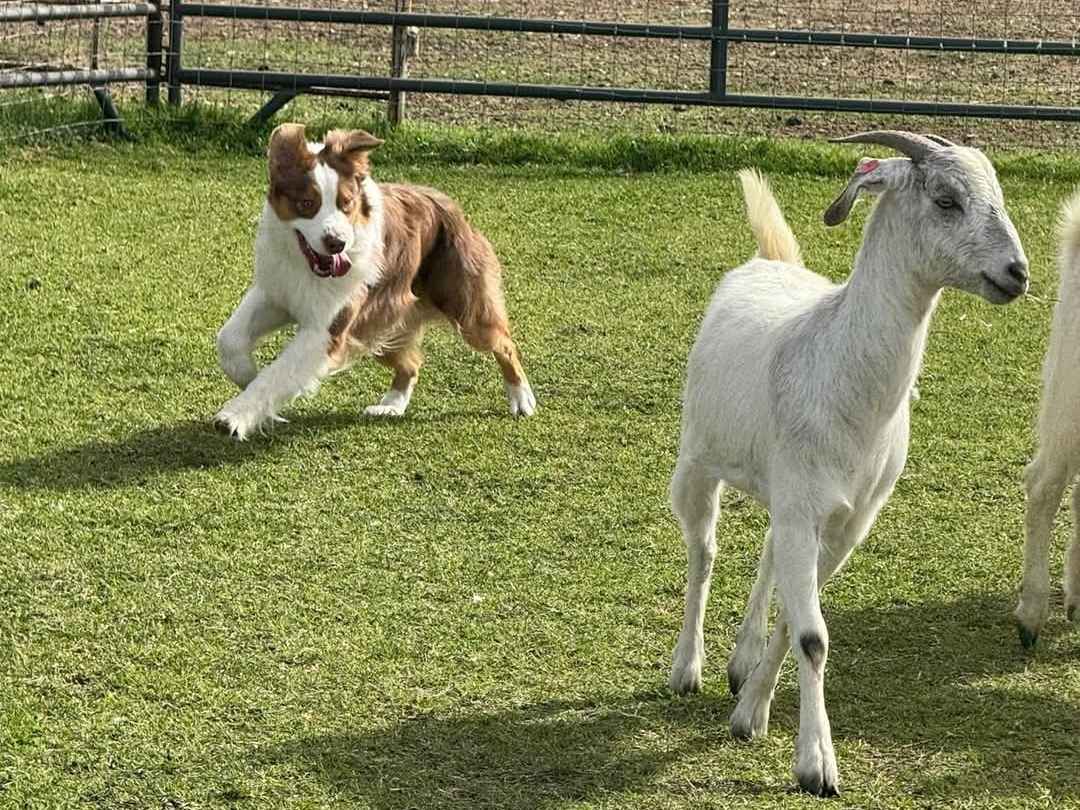
Aussies, on the other hand, have a much “looser eye,” meaning they work more upright, using their body and physical power. They do a lot of wearing — moving from side to side across the flock — and will grip heads or heels if needed to get the job done. They also generally work closer to both the stock and the handler. I say “generally” because within each breed, there are numerous stylistic variations.
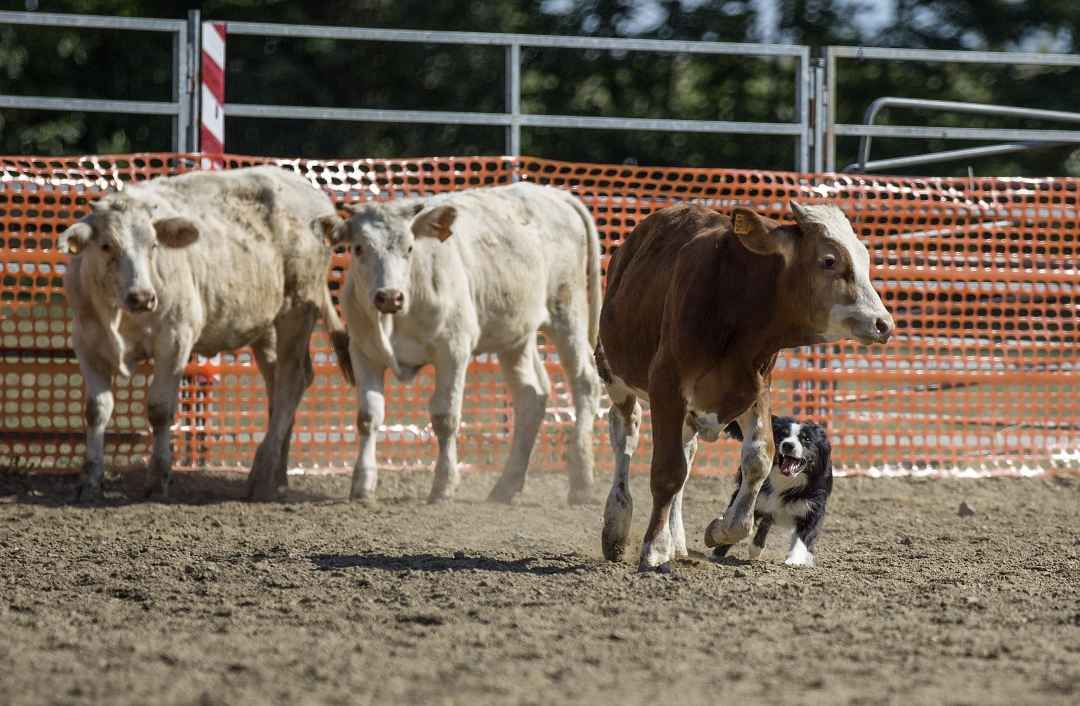
Imagine a dog gathering and penning a group of heavy, stubborn heifers. This task may prove more challenging for the intense-eyed, distance-working and cautious Border Collie, whereas a loose-eyed, assertive and close-working Australian Shepherd typically navigates the stubborn-minded ladies with ease. What might be a quick job for an Aussie can turn into a test of patience for a Border Collie.
Conversely, very light sheep — which are flighty and fast — must be handled with caution and finesse, a more delicate approach. These are strong Border Collie traits. Nothing beats a Border Collie on very light sheep.
Border Collies have been selectively bred to think on a grand scale — imagine those expansive Scottish fields. They instinctively observe and manage livestock from considerable distances. In contrast, Australian Shepherds often need to be trained to identify stock that is far away. Both types of “eye” are equally useful and purposeful, each with its own strengths and weaknesses.
Aussies on Modern Cattle Operations: A Versatile Dog of Many Purposes
In today’s economy, with the cost and liability of hired help — and the difficulty of finding ranch hands — a good stock dog can be a wonderful investment. Whether on a small farm with a few head of cattle or a large commercial ranch, a capable dog provides invaluable help and companionship.
Aussies excel at moving large flocks and herds, pen and stockyard work and flushing stubborn stock from heavy brush that a person on foot or horseback cannot penetrate. They can move a flock of delicate waterfowl just as readily as they can take on a stubborn heifer head-on.
On worming and tagging days, the work is long and demanding — sorting animals and administering medications and tags. The Aussie becomes the cattleman’s right hand, helping bring stock in from the fields, pull individuals from the herd, push them through a squeeze, load trailers or return animals to holding pens.
They are initiative-takers, intelligent and fiercely protective of their owners. More than one farmer owes their life to the protective nature of this fireside working dog. Aussies are known for quick reactions and clear thinking in dangerous situations — whether stopping an angry bull, holding cattle back while hay is thrown, fixing fences or performing countless other tasks.
My own dogs chase deer out of the vegetable garden and keep raccoons away from the chicken coops.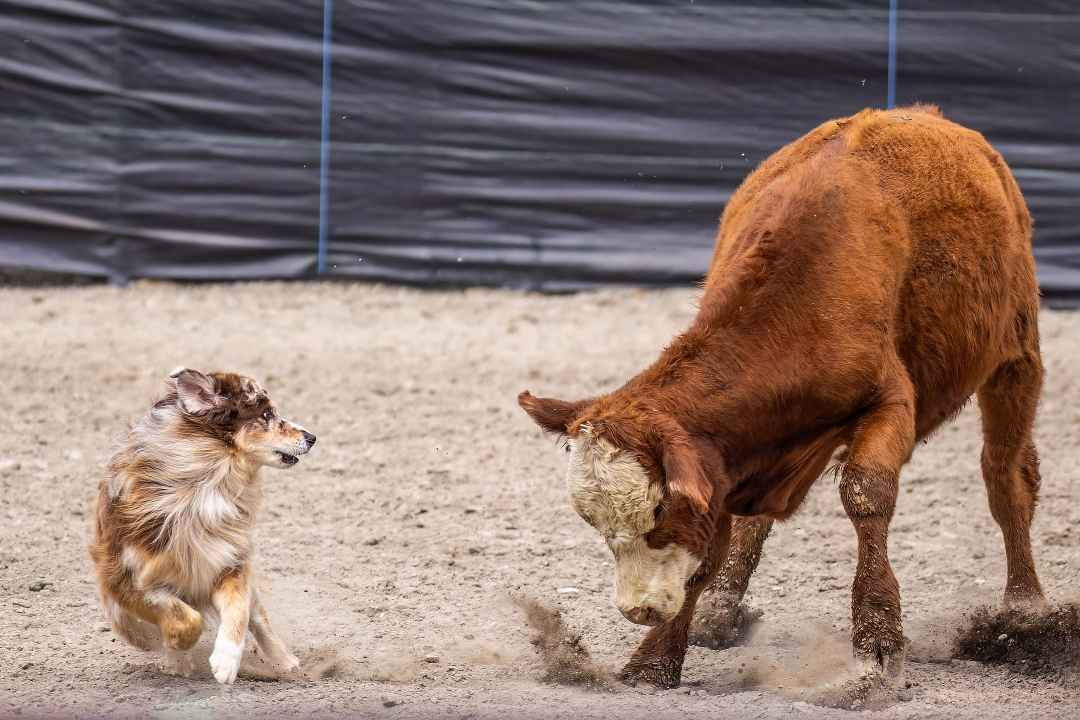
The Aussie as a Family Dog
The Australian Shepherd is also an amazing family dog, transitioning easily from ranch work to playing with children. They are ready to tackle any job placed before them — whether in the field or watching television in the evening.
A defining feature of the Aussie is its well-known “off switch.” With the ease of flipping a light, they go from fierce working dog to devoted bed warmer.
What Do You Want From Your Stock Dog?
If you were hiring a human ranch hand, you would take time to make the right decision. You would ask questions, review a résumé and check references. Choosing a stock dog deserves the same level of thought.
Before making your decision, consider what you will ask of the dog. Once you choose him, be willing to provide the training and development he deserves. You would not turn a new human employee loose on your ranch in the first week and expect him to do everything exactly the way you want. The same applies to dogs.
Training should enhance instinct, not suppress it.
A good dog possesses instincts that must still be combined with experience. A dog that naturally grips cattle and confronts them without fear still must learn how cattle behave. What he learns — positive or negative — is your responsibility. He must understand flight zones, how cattle kick and how they respond when challenged.
Given these tools and a solid foundation, the Aussie can become the most valuable asset on your ranch.
The Great Divide: Working vs. Show Lines
In a perfect world, there would be no divide between “working” and “show” line Australian Shepherds. Some breeders walk the line between the two quite well. There are show dogs that work stock exceptionally, and working-bred dogs that lack drive. It would be naïve to say there is no difference.
Why does this divide exist?
When you focus heavily on one trait, others often fall by the wayside. Focus more on structure, and you may lose working ability. Focus solely on work, and you may lose structural soundness or breed type. If your focus becomes too narrow, other qualities become less important.
When asked whether someone should choose a working-line or show-line dog, the first question should always be: What are your goals?
The difference is similar to that between a high-school athlete and a professional football player. The student athlete may play several sports and be talented at all of them, but the professional has spent years honing a very specific skill set — often with generations of genetic predisposition behind him.
The same applies to the Aussie.
Some dogs come from parents with lower-level working titles but major success in the show ring. Others descend from generations of dyed-in-the-wool ranch dogs that work cattle, sheep, ducks and horses every single day. If that is your goal, seek breeders who consistently produce dogs already doing the work you prioritize.
Know that jacks-of-all-trades are masters of none. The more areas you expect a dog to excel in, the less honed each ability may be.
Final Thoughts
The Australian Shepherd is an amazingly versatile dog. He can be your right-hand cattle worker, a star show dog, a search-and-rescue partner, a service dog or simply your best buddy.
Regardless of your goals, this intelligent and driven breed is well-suited to achieve them.