From Local Production to Global Trade
How Mechanization, Subsidies & International Markets Reshaped Farming
The Birth of Agriculture in Early Civilizations
About 10,000 B.C., the Neolithic Revolution began in the Fertile Crescent of the Middle East. For the first time, humans transitioned away from foraging to settle permanently and began domesticating wild grains such as wheat and barley. This phenomenon arose independently across the globe: rice cultivation took root in China, while maize and squash became the nutritional bedrock of Mesoamerica.
By 3000 B.C., early civilizations in Egypt and Mesopotamia had engineered sophisticated irrigation networks. By redirecting river water, these societies generated reliable crop surpluses. These food surpluses allowed human populations to grow, giving rise to specialized labor, governance and the world's first cities.
The Road to Industrialization
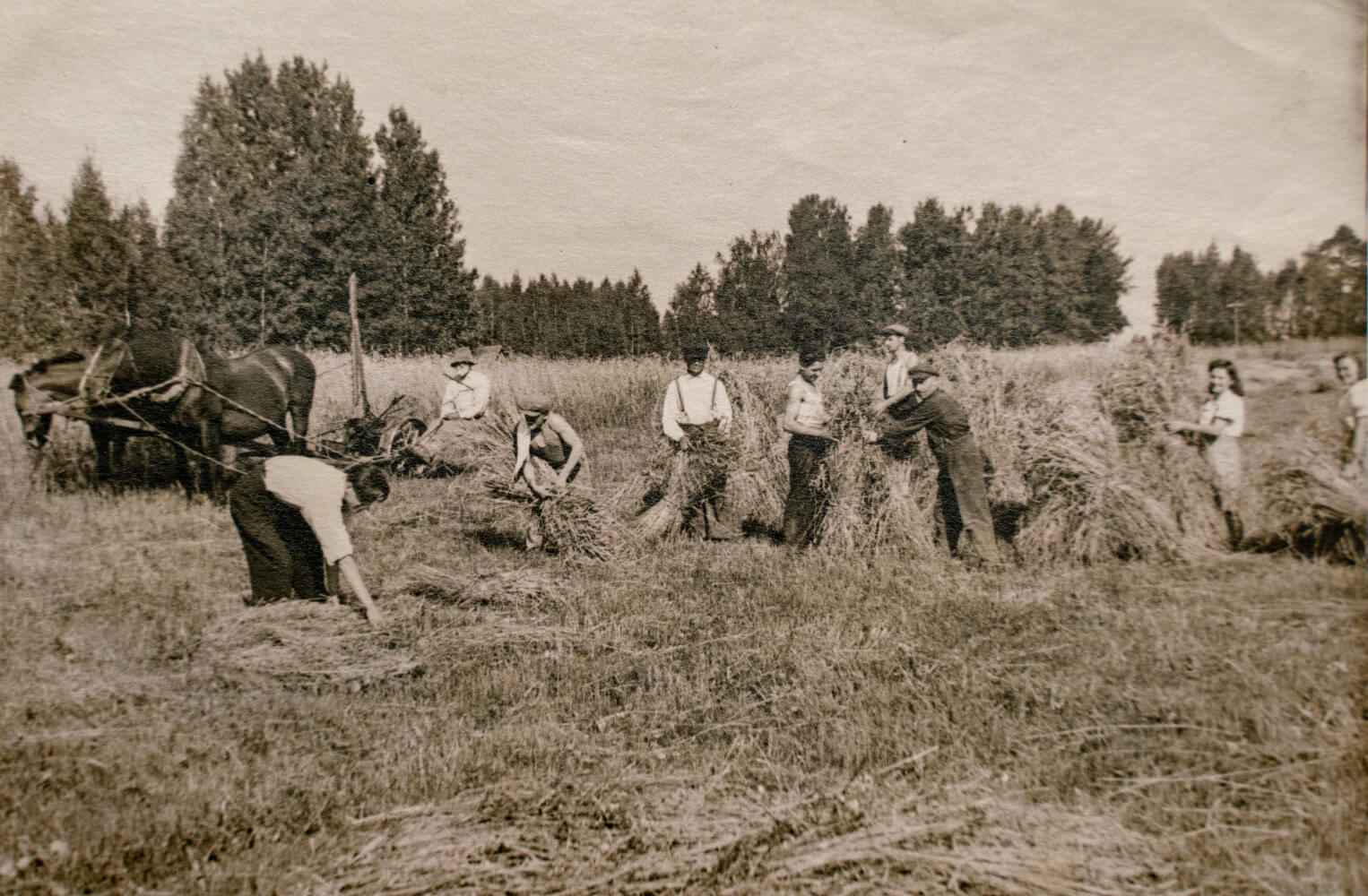
For millennia, farming remained tethered to human and animal muscle. The Medieval period brought incremental but vital shifts, such as the heavy iron plow and three-field crop rotation, which maintained soil fertility. In 1492, the Columbian Exchange radically diversified global food systems by swapping crops across hemispheres.
The pace exploded during the British Agricultural Revolution of the 18th century. Inventions such as Jethro Tull’s seed drill systematically boosted field yields. By the 19th and early 20th centuries, mechanical reapers and fossil-fuel-powered tractors had arrived. Mechanization allowed single farmers to cultivate far larger territories. However, it also introduced steep capital requirements and operational debts, laying the early framework for the commercialization of agriculture.
WWII: The Chemical Pivot
World War II altered the trajectory of global farming by turning weapons of war into agricultural tools. When the war ended, chemical factories that had manufactured synthetic munitions were retrofitted to produce massive quantities of ammonium nitrate fertilizers. Concurrently, wartime nerve gas research paved the way for potent synthetic chemical pesticides.
This chemical abundance launched what was named the “Green Revolution.” Scientists developed High-Yielding Varieties (HYVs) of corn, wheat and rice. These new crops yielded extraordinary amounts of food, but they required heavy applications of chemical fertilizers and pest control to survive. Farming shifted definitively from a natural, biodiverse workshop model to an intensive, chemical-reliant factory model.
The Post-War Subsidy Shift to Monoculture
The defining structural shift of modern agriculture occurred in the decades following World War II, engineered by government agricultural policies and subsidies. Originally designed during the Great Depression to protect low-income farmers from market volatility, post-war subsidies were repurposed to maximize raw volume and drive down food production costs.
Policymakers and corporate leaders explicitly prioritized consolidation, operating under a philosophy popularized by U.S. Secretary of Agriculture Earl Butz: “Get big or get out”. Subsidies were structured to favor volume over diversity. Instead of helping diversified farms, governments paid direct commodity subsidies based on the total acreage of specific cash crops, primarily corn, soy and wheat.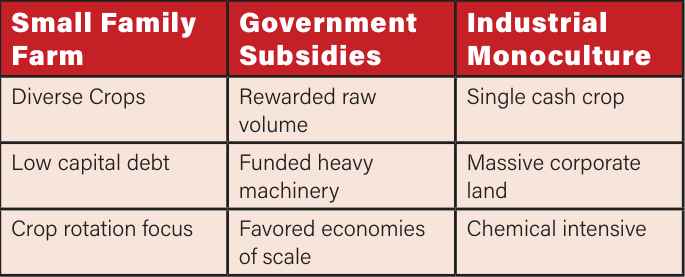
This government funding structure triggered a dramatic cascade of changes across the rural landscape:
- Incentivized Monocropping: Subsidies guaranteed a financial safety net for specific commodities, convincing farmers to abandon sustainable crop rotations in favor of planting a single crop year after year.
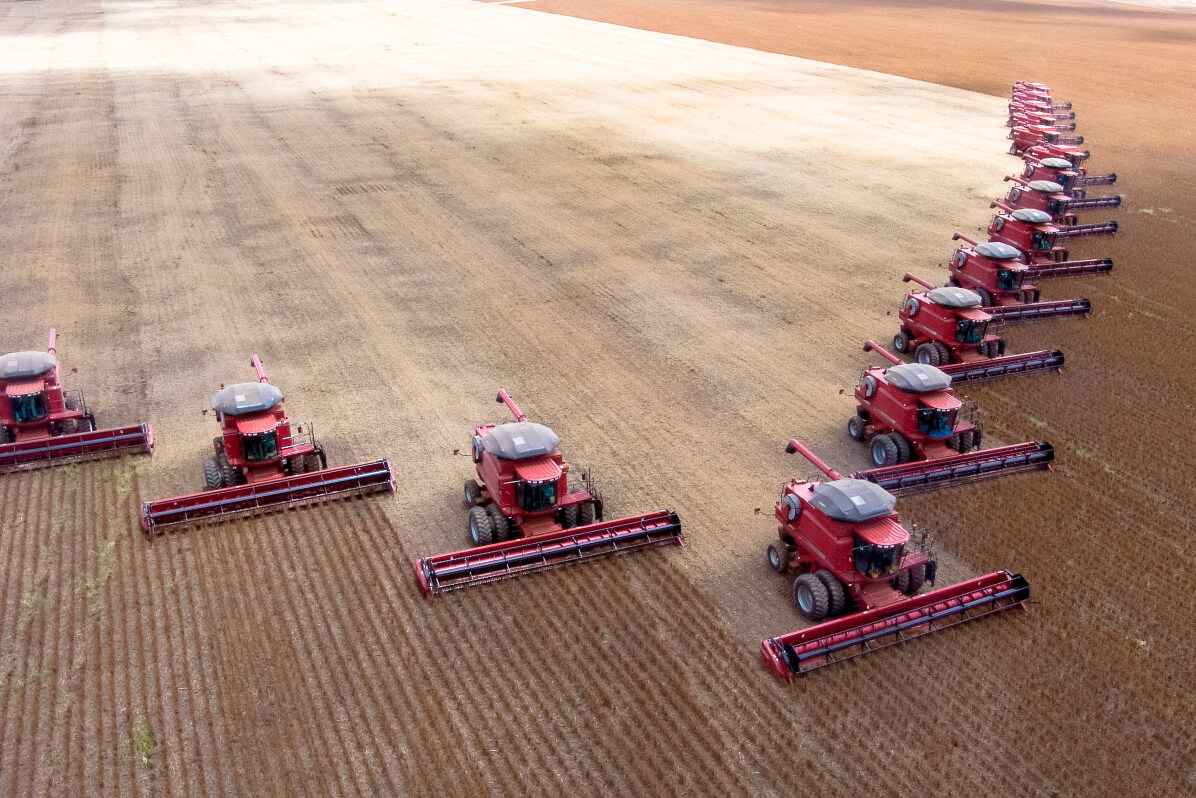
- The Cost of Machinery: Monoculture farming required massive, highly specialized combines and tractors. Large operations could easily absorb these capital expenses by spreading the costs over thousands of acres.
- The Squeeze on Small Farms: Small family farms could not afford the expensive equipment or high-volume chemical inputs required to compete. Because the subsidized market flooded the globe with cheap grain, crop prices plummeted. Small farms, operating without economies of scale, became financially unviable.
As a direct result of these targeted post-war subsidies, millions of self-sufficient family farms collapsed, and their land was absorbed by large agribusinesses. Biodiverse rural landscapes were replaced by vast, industrial monocultures. This system provides cheap, abundant food, but it leaves behind a legacy of depleted soil, diminished biodiversity and heavily consolidated corporate control over the global food supply. The global food trade causes massive carbon dioxide emissions.
Policy To Improve the Situation
Ruralization and a return to traditional farming would, in many countries, mean a far greater agricultural output and therefore much less need for international trade and shipping. Federal governments concerned about carbon dioxide emissions could resurrect small farm subsidies to this end.
Globally, the most exported foods are fish, cereals (mainly wheat), soybeans, beef, chicken, rice, corn and palm oil. Much of this production could be done profitably by small-scale farmers, especially soybeans, beef and chicken.
Soy is the main source of protein in the global food supply. Whereas only 7% of worldwide soy is used for human consumption, about 77% is fed to livestock in China and Europe. Soy’s production has doubled during the past two decades, causing vast deforestation in Brazil’s Amazon rainforest and destroying the immense Brazilian Cerrado savannah. Restoring the small farms of the world would bring a halt to this massive assault on Brazil and the carbon dioxide devastation caused by deforestation and soy freighter shipments.
The top Western overall food importers (U.S., Canada, Germany, U.K.) import about 50% of all their fresh fruit and vegetables, yet have enough agricultural land to become self-sufficient in these basic foods if a government policy-led revival of rural farms were to emerge and grow.
--
About the Author
Elizabeth Woodworth is highly engaged in climate change science and activism as co-author of the two books, “Unprecedented Climate Mobilization,” and “Unprecedented Crime: Climate Science Denial and Game Changers for Survival,” which has a Foreword by Dr. James A. Hansen, “the father of global warming. “ She was also coproducer of the COP21 video “A Climate Revolution For All.”
Elizabeth is author of the popular handbook on nuclear weapons activism, “What Can I Do?” and the novel, “The November Deep.” For 25 years, she served as head medical/health sciences librarian for the British Columbia Government. She holds a BA from Queen’s and a Library Sciences Degree from UBC, Vancouver, Canada.