Livestock Tech That Pays
Monitoring Systems That Improve Feed Efficiency
Feed is the highest cost in most livestock operations, often comprising about 60% to 70% of total production expenses in beef finishing. When margins are tight, even modest improvements in how efficiently animals convert feed to gain can make a difference in the bottom line. A growing number of producers are turning to monitoring technology to find those improvements, using data on individual animal behavior, intake and water consumption to make better day-to-day management decisions.
The systems available today range from smart ear tags to instrumented watering stations to automated feeders. None of them are magic, but the underlying idea is practical: you can't manage what you can't measure.
Smart Ear Tags
Electronic identification tags have been used for traceability for years, but the newer generation of tags does considerably more. Today's smart tags continuously track animal movement, activity levels and behavior, sending alerts when something changes, such as when an animal stops eating, moves less than usual or shows other early signs of illness.
A sick or stressed animal eats poorly and converts feed badly, often for several days before the problem is visible. Catching health issues earlier means less feed wasted on animals that aren't performing, and lower treatment costs when illness is addressed sooner.
Beyond health monitoring, some tag systems can identify which animals are consistently high-intake without returning proportional gain, a variation that's often invisible in a standard pen check but significant at the end of a feeding period. That information has real value for culling and breeding decisions.
According to information from the U.S. Precision Livestock Farming Conference, on-farm implementation of precision livestock systems has the potential to improve production efficiency across all food animal sectors, with health and behavioral monitoring among the more immediately practical applications.
Tag costs vary widely depending on features, from around $30 for basic models to more than $100 for systems with GPS or satellite connectivity. Most platforms also carry subscription or data fees. For operations large enough to act on the data, growers report that the investment returns through better health outcomes and reduced feed waste. For smaller operations, the math is harder and worth working through carefully before committing.
Automated Watering Systems
Smart waterers are often thought of as a convenience upgrade, but the more capable systems double as monitoring tools. Flow meters and sensors on automated waterers can track how much animals are drinking. Changes in water intake are frequently an early indicator of illness, heat stress or water quality problems.
On larger operations, remote water points can go days between physical checks. A system that alerts when flow drops unexpectedly, or when water quality falls outside normal range, catches problems that routine walkthroughs can miss. This is particularly valuable in drought-prone regions, where water availability and quality can shift quickly and directly affect animal productivity.
Research from New Mexico State University examined smart water monitoring systems across grazing operations and found that individual drinking behavior varies considerably between animals and responds measurably to environmental stressors. The study noted that producers in areas with variable water availability have particular reason to track consumption patterns in real time rather than relying on visual checks alone.
As with tag systems, the cost and complexity of smart watering setups vary considerably. Basic flow meter integrations on existing infrastructure are relatively affordable. Purpose-built smart watering systems with full sensor arrays and cloud connectivity cost more and are better suited to operations where the data will actually be used.
Feed Intake Monitoring & Automated Feeding
Knowing how much individual animals eat — not just what goes into the bunk — has historically required research-station equipment. That's been changing. Radio-frequency identification (RFID)-enabled feeding stations that log each tagged animal's intake per visit are now available for commercial feedlot and confinement settings, giving managers a clearer view of variation within a pen.
Two animals on the same ration can eat very differently. When that variation is visible, managers can identify poor converters, adjust rations or investigate health issues earlier. Without the data, those animals blend into pen averages until the performance gap shows up at closeout.
For confinement operations using total mixed rations, automated feeding systems offer a related benefit. Feeding cattle more frequently keeps fresh feed consistently available, reduces sorting behavior and supports more even intake across the pen. Producers who have made the switch to robotic or automated feeding report more consistent daily gains and better overall pen health, though the capital cost of those systems is high and payback periods vary by operation size and feed cost.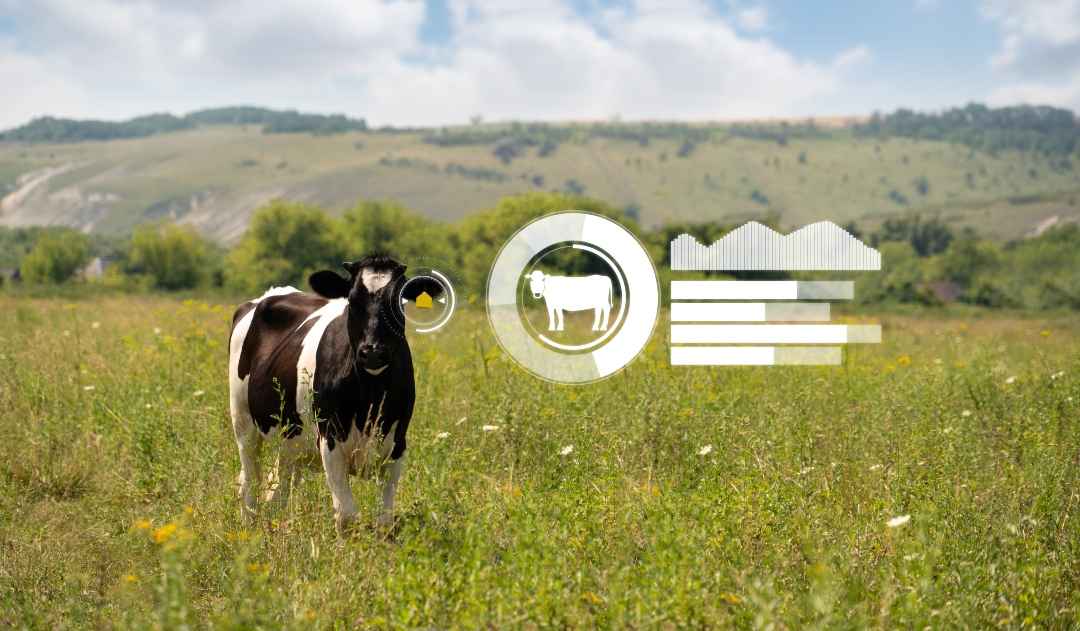
What to Realistically Expect
Precision livestock monitoring is not equally suited to every operation, and adoption rates in the U.S. remain relatively low. Survey research published in Choices Magazine found that of 12 listed precision livestock technologies, only four had adoption rates above 10% among U.S. beef producers, with wearable monitoring technologies sitting closer to the low end of that range. The barriers are real: upfront cost, connectivity limitations in remote areas and the learning curve of turning data into decisions.
The strongest return on investment tends to show up in confinement and feedlot settings, where health events are more costly and feed efficiency gains translate quickly to the bottom line. In extensive cow-calf operations, the case is more operation-specific.
Long-term data across diverse operation types is still accumulating. Producers considering these systems are well served by talking to others who've used them in similar settings, running a trial on one pen or group before scaling up and being clear on which specific problem (health detection, intake variation, water management) they're trying to solve.
The Data is Only Part of It
Producers who've seen results from monitoring technology tend to share that the tools changed the questions they could ask about their herds — not just whether animals were healthy, but which ones were efficient, which ones were eating more than their share and where small adjustments might close the gap.
The technology creates visibility. Acting on what it reveals is where the returns come from.