Post-Harvest Soil Management & Fall Fertility
Setting Fields Up for Next Season
Harvest may feel like the finish line, but for the soil, it is anything but the end of the season. Growers have a short but valuable window to assess what the field has lost, what it needs, and what could limit performance next spring.
That post-harvest period often reveals the season’s hidden costs: nutrient removal, compaction, uneven residue, drainage trouble, exposed ground, and early signs of erosion. Left unaddressed, those issues can reduce nutrient efficiency, weaken soil structure, and make spring fieldwork more difficult and expensive. When managed well, however, fall can become one of the most important opportunities to protect long-term productivity.
Why Fall Matters More Than It Seems
After harvest, fields are finally open enough for growers to see what really happened during the season. Wheel tracks, ponded areas, residue bunching, and low-performing zones are easier to spot now than when spring workloads pile up. It is also the moment when fertility has changed: nutrients have left the field with grain, forage, or removed residue, and the soil’s balance may no longer match crop needs.
Anthony Bly, SDSU Extension soils field specialist, says nutrient removal depends heavily on what was harvested and how. “Nutrients are removed when crops, grain, or forage are removed,” Bly says. “Phosphorus is primarily removed in the grain. Potassium is primarily removed when forage or crop residues are removed. For forage crops like alfalfa, higher amounts of phosphorus are removed too.”
That shift matters because bare or compacted ground is vulnerable heading into winter. Exposed soil is prone to erosion from wind and rain. Compacted zones limit infiltration and root growth. If residue is mismanaged, growers may create new challenges for nutrient cycling or spring planting. Good fall management is about more than correcting a deficiency. It is about improving resilience, reducing risk, and giving next season a better start.
Test Before You Treat
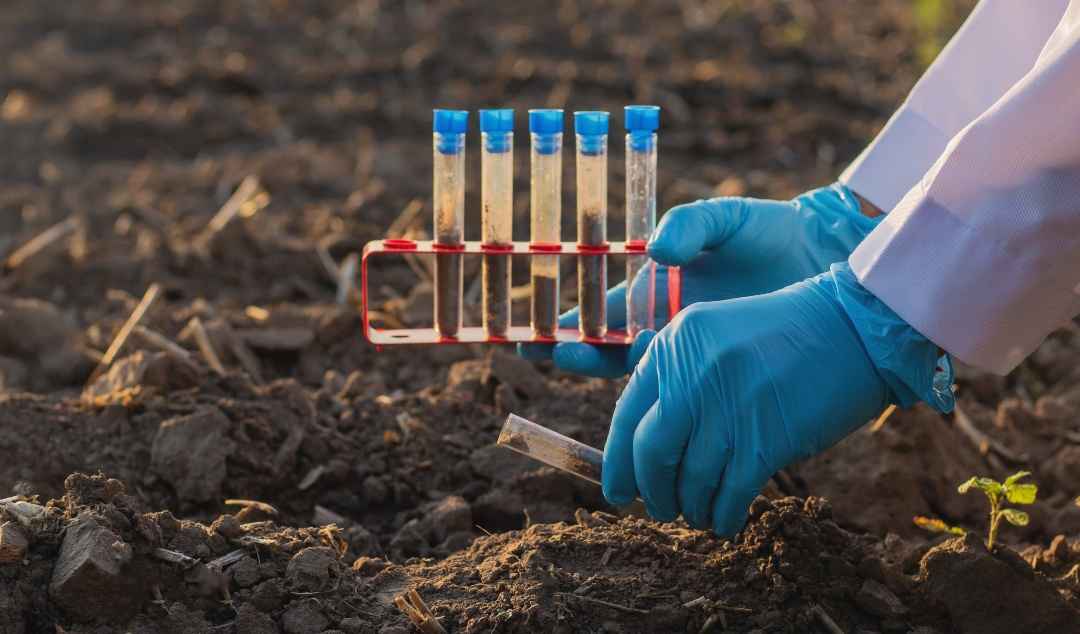
Before making fertility or field management decisions, growers need a clear picture of current conditions. Soil testing remains one of the most useful tools in the post-harvest window, especially when done early enough to guide fall applications.
Soil sampling is the best tool for monitoring soil Phosphorus (P) and Potassium (K) levels. “Using your local university recommendations that are based on long-term, multi-location research is the best approach.” He cautioned against relying solely on simple crop removal math for P and K planning.
“University research has shown that using the crop removal approach for P and K usually results in soil P and K levels eventually increasing above recommended levels,” Bly says.
“Yield goal is ‘not the yield you want, but the yield you can get,’” Bly continues. “Correct yield goal determination is based on past yield history for the field, zone, or grid.” Beyond the lab results, the field itself can tell growers a lot. This is the time to look for wheel-track compaction, crusting, poor residue distribution, ponding, erosion scars, and drainage issues that may worsen in winter.
Read the Field While Problems Are Visible
One of the biggest advantages of the post-harvest window is the visibility it provides. Problems that were easy to overlook when the crop was standing often become obvious once the equipment is out of the field.
This is the time to walk fields and ask practical questions:
- Where did water sit too long?
- Where are the ruts deepest?
- Do traffic lanes create hardpan?
- Is the residue evenly spread, or are there heavy mats that could create trouble at planting?
- Which areas consistently underperformed?
Those observations can help growers prioritize what needs immediate action and what can be monitored across time. A soil test shows chemistry, but a post-harvest walk shows management reality.
Residue Is Protection, Not Waste
Residue is often treated as cleanup, but it plays a much bigger role than that. Left in place and distributed evenly, it helps shield the soil from erosion, moderates moisture loss, and feeds the biology that supports aggregation and long-term structure.
“Soil biology is the primary driver of soil structure formation,” Bly says. “It provides plants with nutrients and at the same time creates organic glues that help hold sand, silt, clay, and organic matter together into soil aggregates.”
That is one reason residue management should be intentional, not automatic. Uneven piles can interfere with planting or nutrient cycling, but removing too much residue creates its own problems.
“Crop residues should be evenly spread across the soil surface,” Bly says. “Keeping residues, plant stalks, and stems as high as possible greatly protects the soil from wind erosion. Crop residues should be removed only as needed.”
Dave Stark, president of agriculture at Holganix, put it even more directly: “Crop residue isn’t something to get rid of — it’s the soil’s next meal.”
As microbes break down residue, they recycle nutrients, build organic matter, and support the living system below the surface. But repeated tillage can undo that progress. “Tillage erases soil structure,” Bly says.
Reduce Disturbance to Protect Soil Biology
Protecting residue goes hand in hand with protecting the soil itself from unnecessary disturbance. Stark says reducing tillage is one of the most important long-term steps growers can take.
“Transitioning to no-till practices is one of the best ways to protect soil structure and soil biology,” Stark says. “Constant tillage physically breaks down the soil structure, destroying the work of the soil’s natural ecosystem and increasing the risk of erosion.”
No-till is not just about what growers stop doing. It is about what the soil gains when structure is allowed to rebuild: better aggregation, improved water movement, more biological activity, and stronger resistance to erosion.
Build a Smarter Fertility Plan
Fall can be a practical time for certain nutrient applications, especially phosphorus and potassium, which do not move through the soil as readily as nitrogen (N).
“P and K can be applied in the fall as these nutrients don’t move far in the soil or leach below the root zone like N can,” Bly says. Nitrogen is different. Because of its mobility and loss risk, fall applications demand caution. “If N is to be applied in the fall, consistent soil temperatures should be lower than 50 degrees Fahrenheit,” Bly notes. “Applying N as close to crop use is the most beneficial way to increase plant uptake efficiency.”
That timing matters because warm soils sustain microbial activity, increasing the risk of nitrogen loss before the crop can use it. Stark adds that erosion and saturated conditions can worsen those losses.
Don’t Let Nitrogen Get Away From You
Nitrogen mistakes can be expensive, and not just financially. Applied too early, too heavily, or under risky field conditions, nitrogen can leach, volatilize, or move off-field before the next crop has any chance to benefit.
Stark warned that overapplication can also disrupt the relationship between crops and soil microbes. “Applying too much nitrogen or phosphorus discourages the crop from secreting carbohydrates through its roots, leaving microbes to find their energy elsewhere, meaning your soil organic matter,” Stark says.
In practical terms, tight budgets make prioritization even more important. Testing first, matching applications to actual field needs, and avoiding blanket rates can help growers protect both their input dollars and their soil balance.
Keep Living Roots Working
If growers want to get the most from the post-harvest window, cover crops deserve serious consideration. Keeping living roots in the ground helps reduce erosion, capture nutrients, improve infiltration, and support biological activity after the cash crop is gone.
Bly pointed to several core soil health principles: keeping the soil covered, reducing tillage, maintaining living roots as much as possible, increasing diversity, and integrating livestock where appropriate.
“All foster soil aggregation, structure formation, and ultimately soil health,” Bly says.
Depending on the goal, different cover crop strategies may make sense. Some growers may prioritize erosion control and biomass, while others may focus on scavenging nutrients, easing compaction, or improving weed suppression. The right fit depends on timing, moisture, system needs, and management capacity.
Fix Spring Problems Before Winter Locks Them In
Fall is also the time to address problems that will only become harder to fix later. Deep ruts, poor drainage, and compacted zones should be noted and prioritized before winter freezes them in place. Low-performing areas should be mapped for a different fertility or management strategy next year.
The biggest mistake is often doing too little, too late. “Not using soil testing, a correct yield goal, and university recommendations are common mistakes,” Bly says.
A Stronger Season Starts After Harvest
Post-harvest soil management is not a side task after the crop is off. It is an investment in next season’s performance and the long-term strength of the field. Fall offers growers a rare chance to see issues clearly, act before spring pressure mounts, and make decisions that improve nutrient retention, soil structure, and resilience.
The best place to start is simple: test first, assess honestly, and prioritize the biggest limiting factors. Whether that means better residue distribution, a more disciplined fertility plan, cover crops, or compaction repair, the work done now can pay forward into a healthier, more productive spring.
Fertility is not just about replacing what the crop removes. It is about building soil that can keep delivering year after year.
The goal is not just to feed next year’s crop. It is to build a stronger system.