The Price of Tariffs
How 2025 Global Tariffs Affected US Agriculture
As 2025 comes to an end, few sectors have felt the economic strain as deeply as American agriculture. Tariff policies under the Trump administration have created a ripple effect across global markets, farm incomes and rural communities, leaving many small and mid-sized producers fighting for survival.
To understand what took place and how it’s affected U.S. farmers, Rod Skyles, The Unconventional Economist, shares his perspective. Skyles grew up on his father’s Idaho farm and later co-founded a material science and agricultural contracting company. With a background in economics, history, politics and hands-on farming, Skyles offers a unique viewpoint on the economic pressures facing farmers today.
An Economic Shock
According to Skyles, the tariff battle with China, particularly before the October 30 agreement, had a dual impact on U.S. farmers, affecting both revenue and expenses.
“Farmers took a lot of the brunt, because China is our biggest trade partner when it comes to agriculture,” he explains. “This was especially true in the soybean business.”
In 2025 alone, corn, sorghum, wheat and pork markets took large hits. But the most significant was the soybean market, which saw the largest loss, declining about $20 billion in sales. A lot of this was due to China redirecting soybean purchases to Brazil, creating oversupply in the U.S. and driving prices down.
At the same time, fertilizer and other inputs became more expensive due to import tariffs.
“Farmers not only lost sales, but then the price of their products went down significantly because of oversupply,” he says. “At the same time, they’re paying more for inputs, like fertilizer. They got the brunt of both sides. It’s not been a good year for farmers from that standpoint.”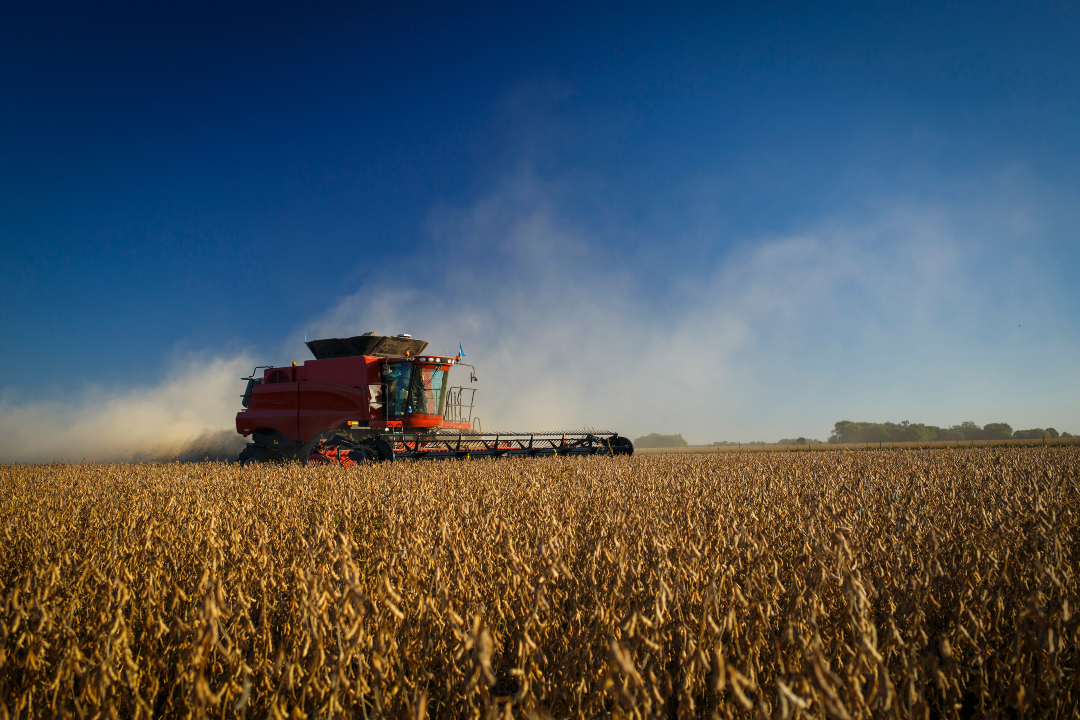
Farm Finances Under Strain
Although much of the 2025 data won’t be available until well into 2026, the year-to-date numbers are painting a pretty grim picture for farm businesses nationwide.
The Midwest, where much of the soybeans and corn are grown, has taken a significant toll due to the tariffs. In this area alone, farms are seeing net income drop by 15%, and bankruptcies are projected to be up at least 50% this year.
Skyles recalls a farmer he works with who was forced to sell a multigenerational farm just to stay afloat:
“He said he’ll never be able to buy it back,” he shares. “Our farmers work so hard. They take incredible amounts of financial risk to make such a small amount of money.”
Even government aid failed to soften the blow. According to Skyles, the top 10% of farm companies received 75% of the aid: “The little guy farming 300 acres — the family that needed it the most — didn’t get it.”
On top of financial strain, farmers are also experiencing the emotional toll this year has created.
“I’ve talked with farmers, especially those in the Midwest, and they’ve shared that there’s been a spike in farmer suicides,” Skyles adds. “The pressure is palpable — it’s been really tough.”
Helpful or Harmful?
Despite the hardships and negative impacts, Skyles believes U.S. agricultural relationships abroad haven’t been permanently damaged — at least not yet.
“The October 30 China deal appears to be a really healthy agreement,” he says, though rebuilding momentum will take some time. Brazil was a big winner because it’s a large soybean producer, and China shifted its purchasing there. But according to Skyles, it appears the U.S. has been “able to salvage that.”
But when it comes to tariffs themselves, Skyles remains cautious. Still, he acknowledges the geopolitical reality: other nations have long imposed tariffs on U.S. goods while the U.S. played by different rules. Correcting that imbalance is and will be complex.
Ultimately, Skyles says it may take years to know whether the tariff strategy strengthens or weakens U.S. agriculture internationally. Unfortunately, in the short term, the burden falls on the farmers’ shoulders.
“The challenge with the government is it’s not incentivised to make good decisions,” he says. “And unfortunately, there isn’t a check and balance. So when they make policy, it’s more for politics, and the farmers end up taking the hit.”
Lessons for the Future
To weather the future, Skyles believes farmers will need to shift their focus toward regional markets and diversify what they grow.
“Smaller farmers need to think more locally and not globally,” he says. “They need to ask, ‘What can I grow that serves my region?’”
He offers a few examples, such as onion growers in Idaho, barley malt operations serving microbreweries and large-scale organic garlic farms in Oregon.
“The key is to find a niche,” he adds. “Being creative and diversifying what they grow is what’s going to save our farmers.”
Another strategy Skyles strongly supports is cooperative processing, something his father championed decades ago.
“Farmers should gather together, create co-ops and own the processing,” he says. “Look at the Amish — they’re basically co-ops. They work together, they sell their products together and they do very well.”
Skyles believes that co-ops could help small and mid-sized growers compete with major corporations and capture more value from the crops they already grow.
“There’s a growing tide towards buying fresh, local food when possible,” he adds. “Farmers would be well served to lean into that. The farms that have, have done really well.”
Final Thoughts
Reflecting on the past year, Skyles is hopeful. Farmers, he says, have always lived close to the financial edge, but they also possess great resilience, ingenuity and a deep connection to the land.
“Farmers are smart. They know how to grow crops and work the ground. My advice to them would be not to depend on the government to make good decisions on your behalf. Try to look past that and make the best decisions you can — look for alternatives, like co-ops and niche crops — I believe that’s what’s going to save farmers,” he concludes.