USDA Opens New Livestock Insect Research Laboratory in Kerrville, Texas
USDA opens new Kerrville lab to study cattle pests, including flies and ticks, advancing research on livestock protection and insect control.
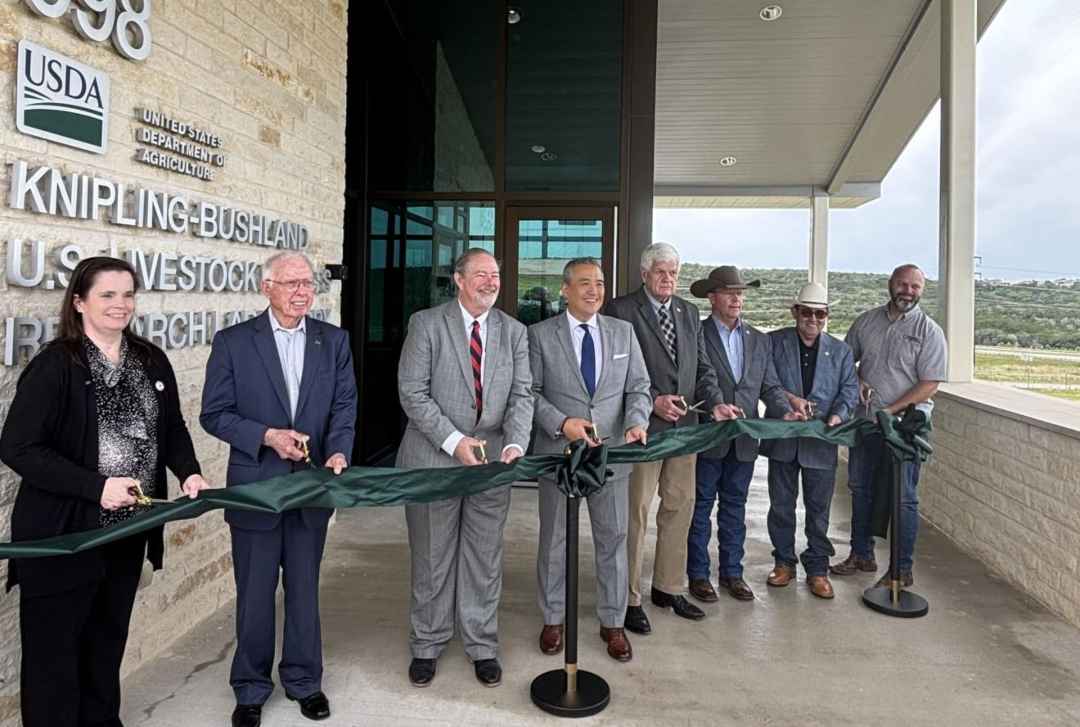
The U.S. Department of Agriculture’s Agricultural Research Service (USDA ARS) has opened the Knipling-Bushland U.S. Livestock Insects Research Laboratory in Kerrville, Texas, a new facility focused on livestock pest research affecting the U.S. cattle industry.
The laboratory is designed to support research into invasive and harmful livestock pests, including flies, ticks and the New World Screwworm, which can impact cattle health and productivity.
According to USDA, the facility will provide advanced tools and technologies to help manage and reduce livestock pest threats and support ongoing efforts to protect the U.S. cattle supply.
The 52,000-square-foot laboratory includes advanced research spaces, cattle facilities and a genomics core. USDA states these capabilities will support the development of pest control technologies, including:
- New surveillance and trapping tools
- Novel insecticides and acaricides
- Improved pesticide delivery methods for cattle and wildlife
- Strategies to reduce pesticide resistance
- Genomic research to identify pest vulnerabilities
The facility will also support research into sustainable methods for preventing and responding to outbreaks of invasive arthropod species that affect livestock.
The new lab houses two USDA ARS research units: the Livestock Arthropod Pest Research Unit and the Veterinary Pest Genetics Research Unit. These groups focus on improving livestock health and protecting the food supply from pests that affect cattle production.
Research conducted at the facility will also target biting flies and ticks, which are known to impact cattle health and can transmit disease.
ARS Administrator Joon Park said the facility will expand the agency’s ability to address both current and emerging pest threats affecting U.S. livestock.
USDA noted the Kerrville area has a long history of livestock insect research spanning about 80 years. Previous work at nearby ARS facilities includes:
- Research that contributed to the eradication of New World Screwworm from the United States in the 1970s
- Development and testing of pesticide solutions for controlling flies and ticks
Genome sequencing of more than 25 livestock pest species
The new facility continues that research legacy with updated infrastructure and expanded scientific capabilities.
The laboratory is named for USDA researchers Dr. Edward F. Knipling and Dr. Raymond C. Bushland, who developed and demonstrated the Sterile Insect Technique (SIT), a method used to control screwworm populations.
SIT has been a key tool in past eradication efforts in the United States, Mexico and Central America, and continues to be used in ongoing pest control programs to prevent reinfestation.
The Agricultural Research Service is the USDA’s primary in-house scientific research agency, focused on agricultural problem-solving and supporting U.S. food and livestock production systems.