Every Load, Every Move
Attention to Equipment, Cargo & Conditions Reduces Risk
There’s a version of farming people tend to picture, the quiet fields, birds in the hedgerow, maybe the hum of a tractor in the distance. Then there’s the real version we actually live in, equipment on narrow roads, trailers loaded down a little heavier than we’d prefer and a constant awareness that we are sharing space with people who are not expecting us.
Work zone awareness isn’t just a highway department, construction site or warehouse issue. Out here, our farms are work zones, and at our farm, whether we’re running our antique equipment, hauling livestock or just trying to get from the home farm to the acreage down the road, the risks are real and close.
Yesterday’s Equipment on Today’s Road
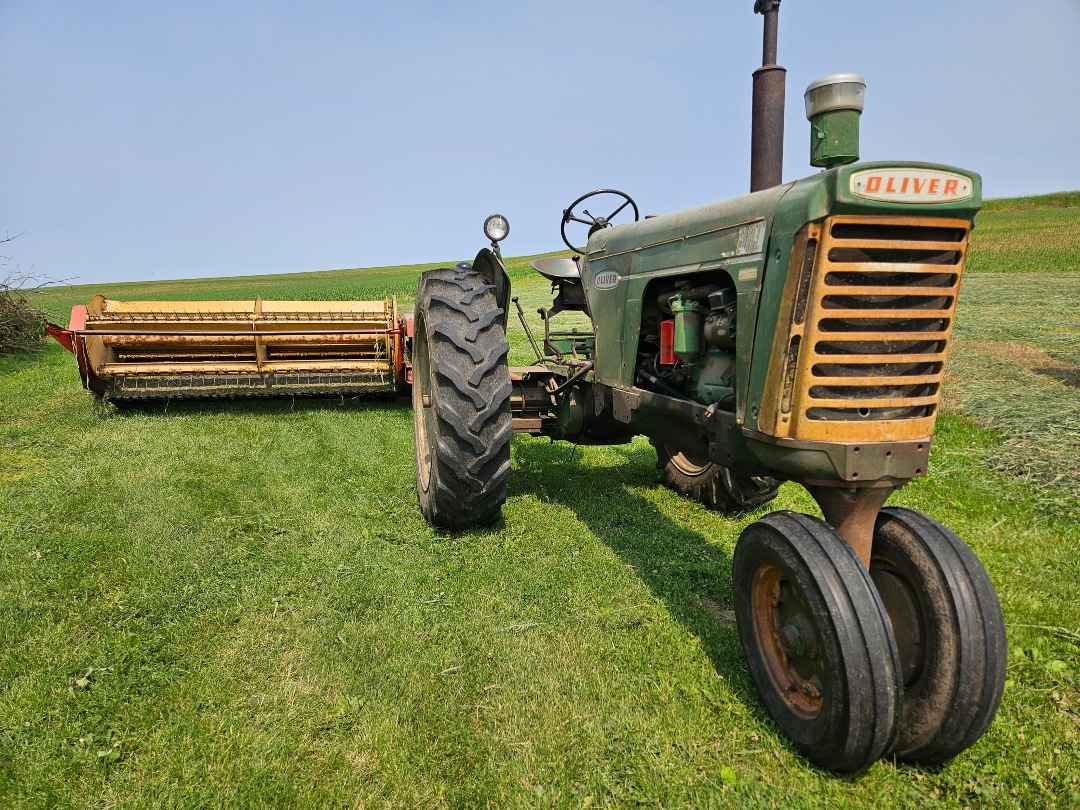
A lot of you, like us, are still running older equipment, and for good reason. It’s reliable, fixable and paid for, but it wasn’t designed with modern traffic in mind. That old tractor might top out at 12 to 18 miles per hour on a good day. The power steering might be, hopefully, optimistic at best. Lighting is minimal, and even when upgraded, it’s still not comparable to what drivers are used to seeing on other vehicles or even modern farm equipment.
From the seat, you feel exposed. You know how long it takes to get up to speed. You know how much room you need to turn, and you know that if something goes wrong, you don’t have a lot of margin for error. That means we have to operate with intention.
Hug the shoulder when it’s safe, but don’t put yourself in a ditch trying to be polite. Use your slow-moving vehicle (SMV) signs and keep them clean and visible, add lights and flashers where you can, even on older rigs, and assume no one understands how slow you actually are, because the truth is, they really don’t.
When the Load Isn’t Static
Hauling livestock or produce adds another hectic layer. Now it’s not just about you getting somewhere, it’s about what you’re carrying.
A trailer full of animals shifts. It breathes. It reacts in real time. Even a well-balanced load can change how your vehicle handles, especially on backroads with soft shoulders or uneven pavement. Your margin for stopping and accelerating changes, along with other drivers' reactions to that.
When you’re hauling for your market garden, be it plants, bins or harvest totes, everything is stacked, often high, sometimes last-minute and slightly lackadaisical after a long day. We’ve all done the “it’ll be fine” load, but “fine” can quickly become dangerous if something shifts or spills. Take the extra minute to secure your load properly, check your tires and hitch before pulling out, especially after sitting, give yourself more stopping distance than you think you need and slow down before curves, NOT during them.
Loading & Weight Distribution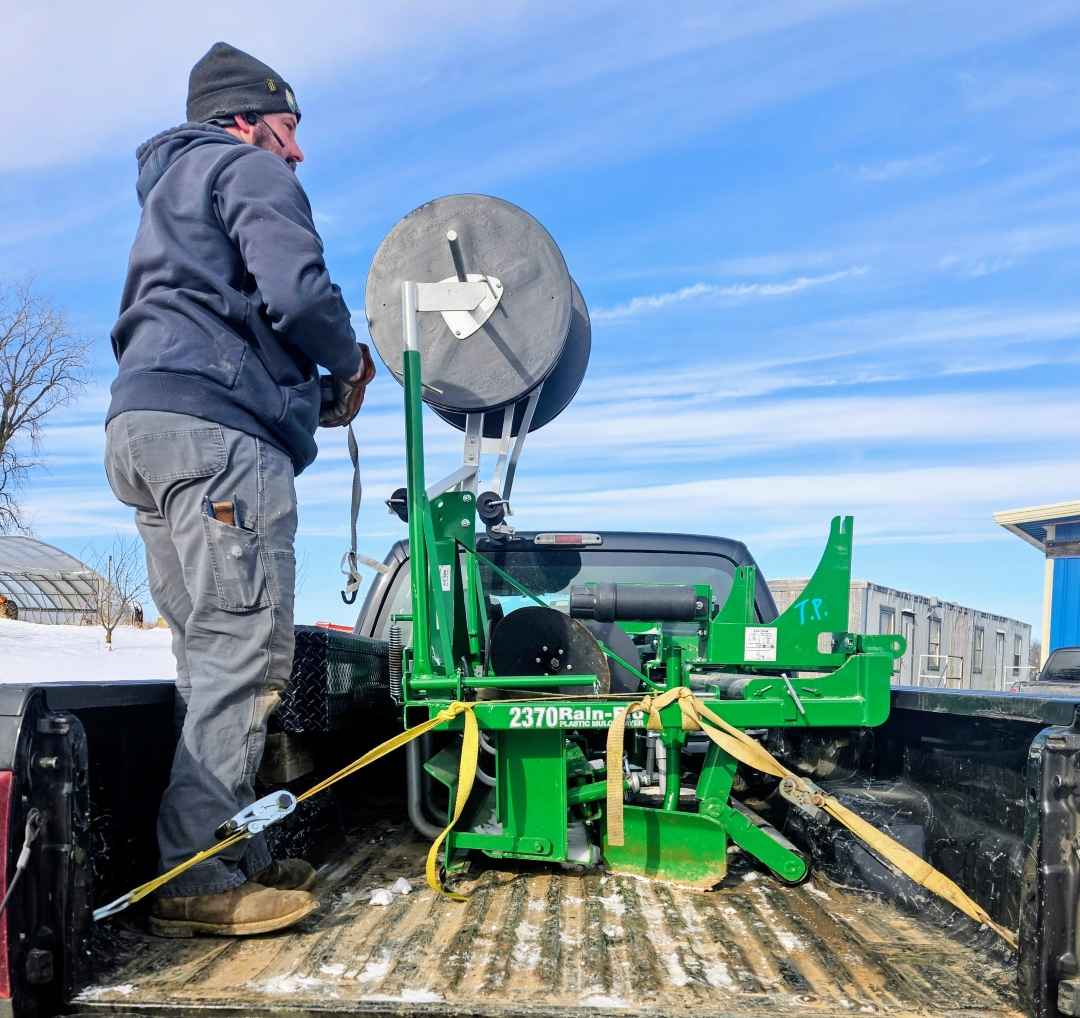
Hauling tractors on trailers is its own kind of risk, especially with older equipment. Narrow tractor fronts, wide tractor fronts, worn or flat tires and rusty implements don’t always load predictably. The ramps can also be slick, angles are sometimes steep and it doesn't take much for a tractor to slip and shift in a way you didn't plan for. Weight distribution also matters more than people realize. Too far forward or too far back, and your trailer starts working against you instead of with you. Take your time loading and unloading, make sure your weight distribution is balanced across the trailer axels, use chains and binders and stop to recheck after a few miles if needed.
Shared Roads & Unpredictable Conditions
If you are like us, you aren't farming in one neat square. We’re all moving between plots, leased ground, neighbor agreements and different barns. That means clocking road time, sometimes a lot of it. We know rural roads are their own kind of unpredictable, with blind hills, narrow shoulders, drivers who treat them as speedways or just people distracted, lost or not paying attention. It only takes one person coming over a hill too fast to turn or someone wanting to pass where they shouldn't, to turn a routine trip into something serious.
So, we adjust and make ourselves as visible as possible by using hazard lights even in daylight when moving slow, planning routes to avoid the worst roads at peak times and not assuming visibility means safety. Make your turns early and clearly, but most importantly, don’t rush. There’s always pressure to hurry. Animals need feeding, markets don’t wait, weather is coming in quicker than we thought, but rushing on the road is where small mistakes stack up fast.
Even when you’re not “on the road,” you’re often right next to it. Market gardens especially tend to sit close to roadways. It’s convenient for access, but it puts you, your crew and your equipment within feet of passing traffic. You might be focused on harvesting, transplanting or moving irrigation, but cars are still moving at full speed just beyond your row. Be aware of where people are positioned relative to the road, keep tools and hoses out of the right-of-way, use cones or markers if you’re working close to traffic and make eye contact with drivers when possible before crossing or moving equipment. It’s easy to get tunnel vision when you’re in the work, but awareness at the edges matters just as much.
Visibility & Awareness
We spend a lot of time thinking about how to make ourselves visible and that’s important. But visibility also means seeing what’s coming. Your mirrors matter, clean them, adjust them and, most importantly, use them. If you’re running equipment without good rear visibility, consider adding mirrors or even a simple camera system. It’s a small investment compared to the cost of guessing at what’s behind you.
Dust, sun glare and weather all play a role too. There are times of day when it’s just harder to see and just as hard, if not harder, to be seen. Early morning and late evening might be ideal for farm work, but they’re also when drivers are least attentive or most rushed. Pay attention to those conditions and adjust accordingly.
If you have help in the form of kids, employees or volunteers, work zone awareness isn’t something they just pick up. They need to be told how to approach equipment safely, where to stand (and where not to stand), how to move around trailers and loads, when to wait and when to go. It’s easy to assume something is “common sense.”, but common sense comes from experience and not everyone has the same background. Clear communication prevents accidents.
Finishing the Day Safely
At the end of the day, we don’t control who’s on the road with us. We don’t control how fast they’re going, whether they’re paying attention or whether they understand what we’re doing. What we can control is how we show up in those shared spaces. We can operate equipment responsibly, maintain what we’re using, plan our movements and stay aware, even when we’re tired.
Let’s be honest, fatigue is part of this. Long days, early mornings, physical work, that’s when mistakes happen. That’s when awareness slips the most. So if there’s one thing to take seriously, it’s this: don’t push past the point where you’re paying attention.
Farming doesn’t happen in isolation. It happens alongside everyday life, heavy traffic, busy schedules and people who have never stepped foot on a farm. Work zone awareness is about recognizing that reality and operating within it. It’s not about fear. It’s about respect for the equipment, for the road, for the animals and for the people around us. Because, at the end of the day, the goal is simple: Do the work, get home safe and do it again tomorrow.