Guidance to Intelligence
Turning Field Data Into Actionable Insights
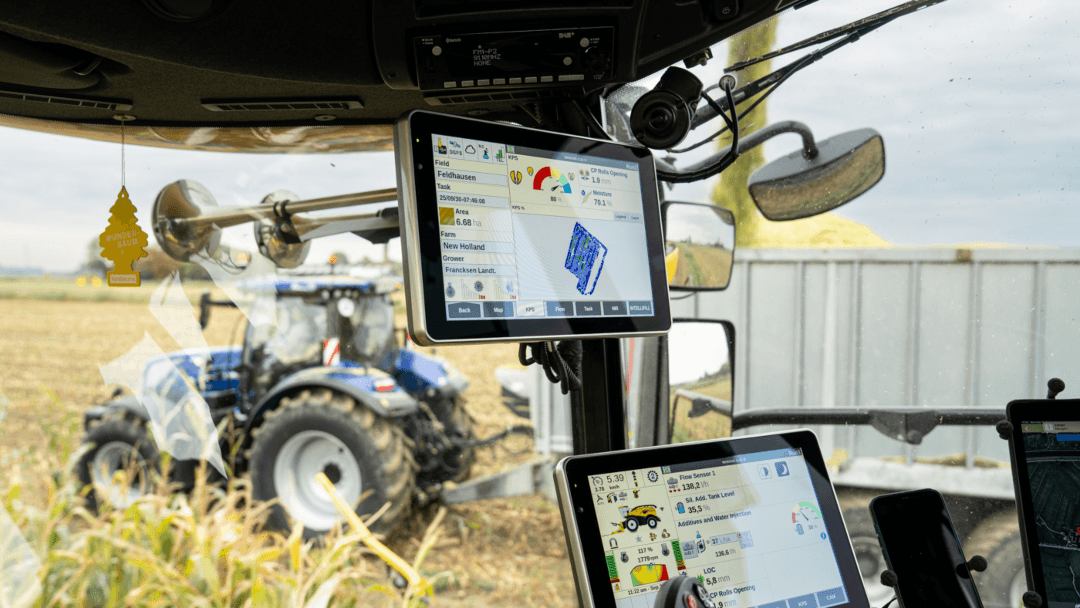
Simple GPS systems and yield monitors seem almost prehistoric in today’s agricultural landscape, as modern technology can sense conditions, analyze information, and respond in real time.
The National Science Foundation describes precision agriculture as a crop management strategy that gathers and analyzes data so crops receive what is needed; it was once centered on portable yield monitors and GPS-guided tractors. But today’s systems have grown into a connected ecosystem, providing information on crops, soil, and environmental conditions, while technologies such as artificial intelligence (AI) and robotics can help analyze that information. With more technology, the goal isn’t to just have more data, but to turn that data into usable intelligence for decision-making and operations.
Keeping Every Pass Consistent
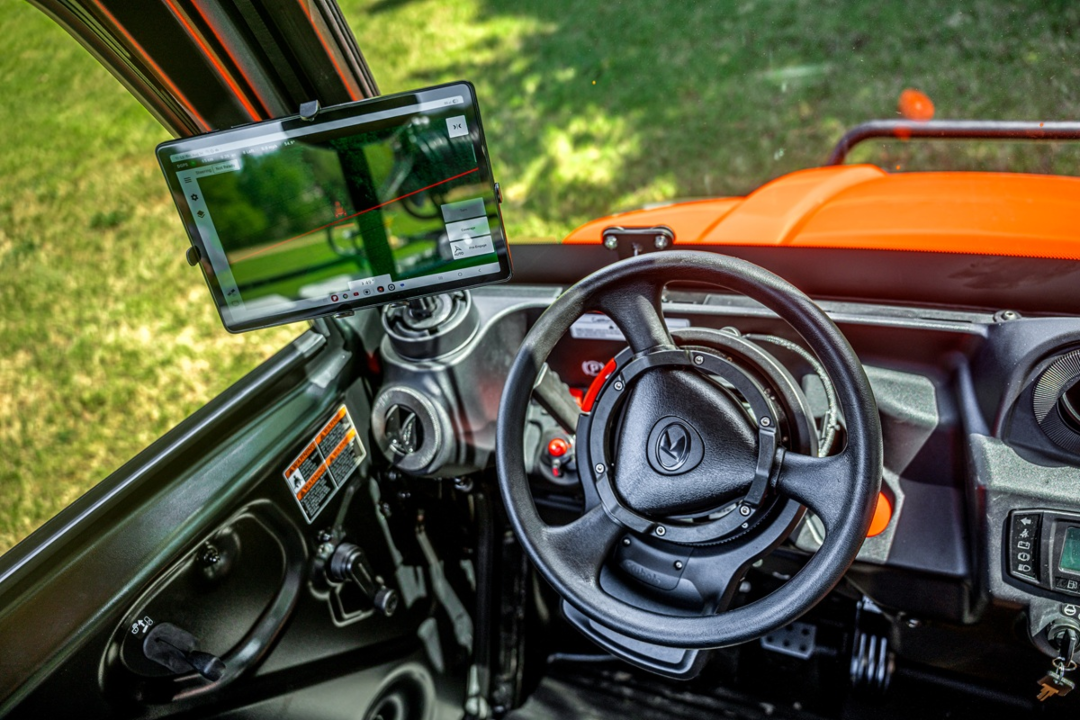
As precision agriculture evolves, guidance technology has positioned itself as one piece of the larger picture. Precision guidance is designed for repeatable pass-to-pass accuracy, reducing overlap and missed ground. Kubota Tractor Corporation’s new WorkSmart Autosteer system for compact and utility equipment keeps machines on a defined line to maintain consistent passes across broadacre fields, specialty crops, turf, and groundworks.
“WorkSmart Autosteer isn’t about removing the operator from the decision; it’s about helping to remove fatigue and error from the equation,” said Austin Hawkins, senior manager, technology sales and marketing, Kubota North America. “At your command, the machine holds the line, so you stay sharp, cover more ground, and still get home with something left for the people who matter most.”
WorkSmart Autosteer expands Kubota’s precision guidance beyond larger agricultural tractors, bringing repeatable steering and pass-to-pass accuracy to a broader range of field and property applications.
Measuring Crop Conditions
Guidance tells the machine where to go, but systems are increasingly able to observe what is happening during operation for real-time feedback.
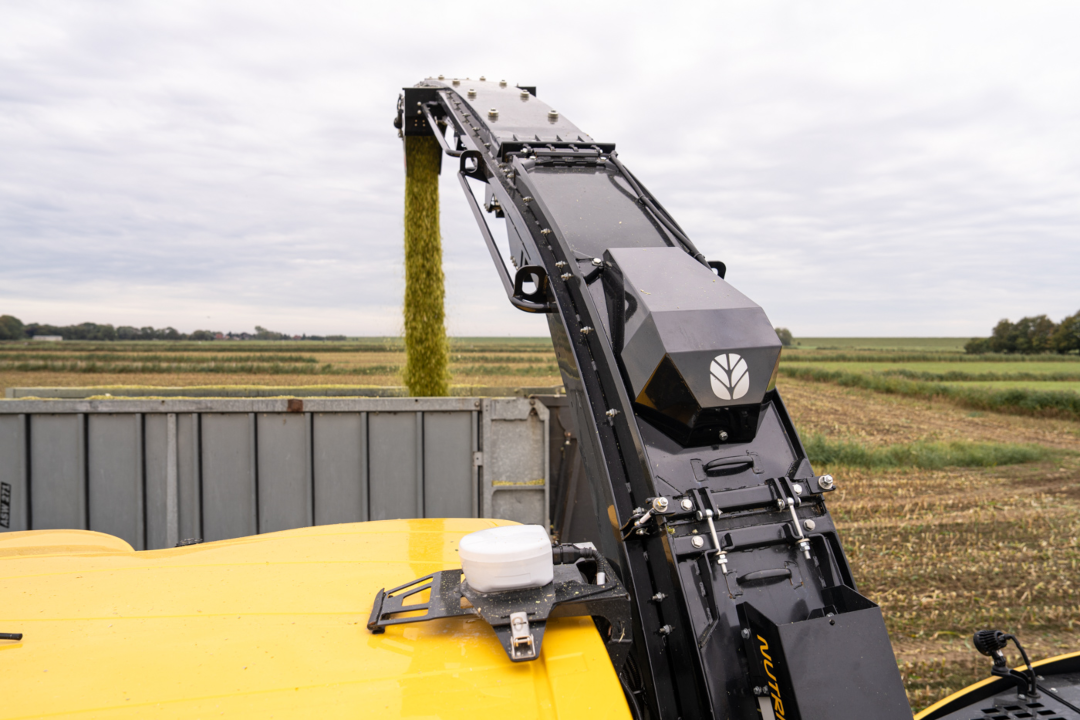
The New Holland ForageCam, announced during the 2026 Farm Progress Show, is a spout-mounted camera that utilizes AI to evaluate forage processing during harvest. The system continuously analyzes chopped corn as it moves through the machine and monitors the percentage of fully processed kernels to calculate a kernel processing score (KPS). The KPS is then compared with a predetermined target, and the system automatically adjusts kernel processing as needed. New Holland claims the technology can reduce machine wear, minimize fuel consumption, and eliminate underprocessing.
“For dairy and beef producers, feed quality is the most important indicator of forage harvester performance,” said Patrick Weitzel, forage harvester marketing manager for New Holland North America. “With ForageCam, producers and custom operators are getting a real-time KPS and can assess right away if the quality is high enough the moment their forage is running through the harvester. In the past, we had to guess from the cab what the score was or send samples to the lab to determine the KPS. Now, we instantly know the forage score and quality.”
Previously, producers could only estimate forage quality; here, they can use real-time information to make adjustments as conditions change, rather than relying on information after the fact.
Visualizing Field Variety
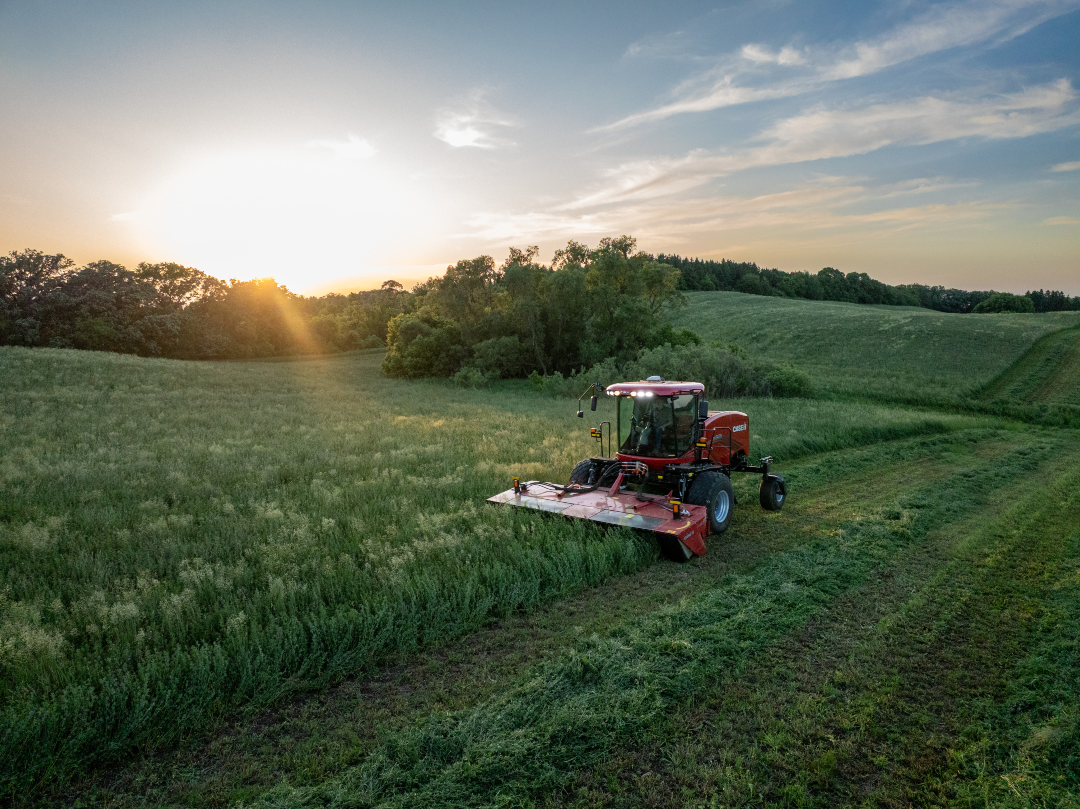
As producers move from intuition toward information, technology is also helping them see what is happening across the field and respond to those differences. The new Case IH WD6 series windrower features Relative Yield Mapping technology, allowing operations to view a color-coded map of relative, in-field yield while harvesting, displaying high, low, and average areas.
“Producers can now leverage data to paint a real picture of where in the field there might be issues impacting yield potential,” explained Ryan Kau, customer segment lead at Case IH. “This gives you a clear edge, providing year-over-year insights to make smarter decisions on inputs when costs are high, directly boosting your profit potential.”
The data, viewed through Case IH FieldOps, allows for year-over-year comparisons and more targeted management.
Connecting Field Operations
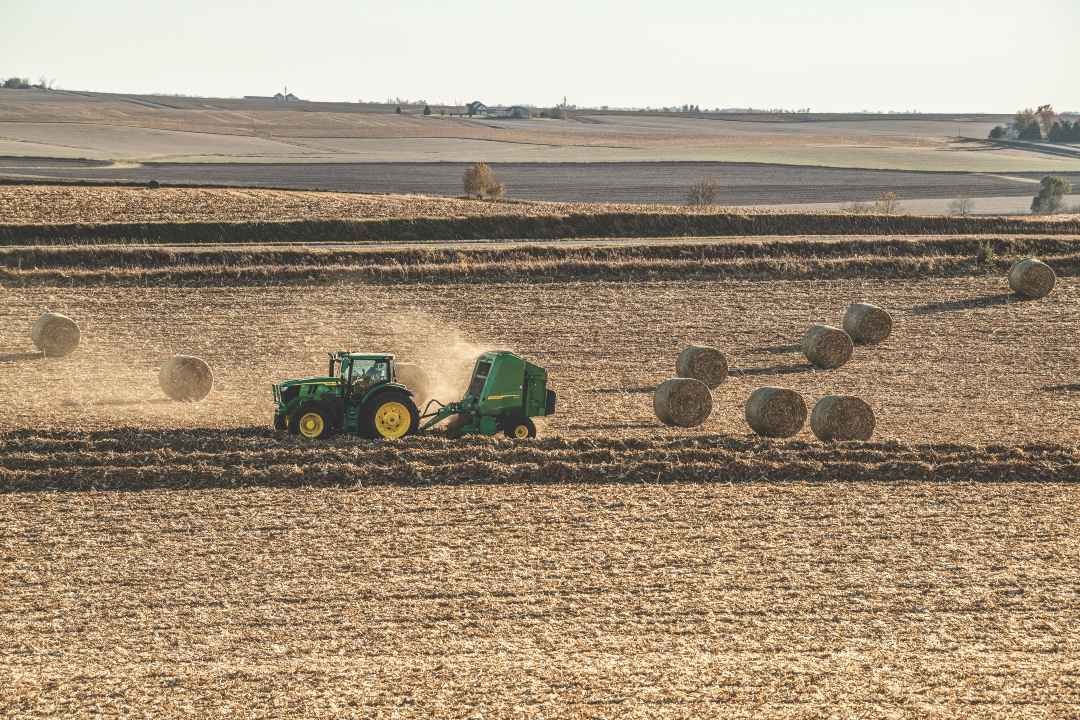
Mapped information and data are no doubt useful, but connectedness is where these technologies can work together. John Deere’s addition of Hands-Free Baling, an integrated automation system for consistent baling of hay and corn stalks, exemplifies this approach. The system combines AutoTrac, AutoTrac turn automation, gate automation, speed automation, and weave automation, using guidance lines from previous combine passes to follow windrowers and automation to manage speed, stopping, wrapping, bale ejection, and headland turns.
“The hands-free baling technology combines John Deere’s legacy guidance feature, AutoTrac, with our innovative Weave Automation round baler feature, creating a solution that was built shoulder-to-shoulder with our customers. It makes a repetitive baling job easier and more efficient,” said Kaylene Ballesteros, marketing manager for hay and forage equipment at John Deere. “By automating the baling process, we’re helping operators simplify their job and reduce the opportunity for error.”
Turning Data Into Answers
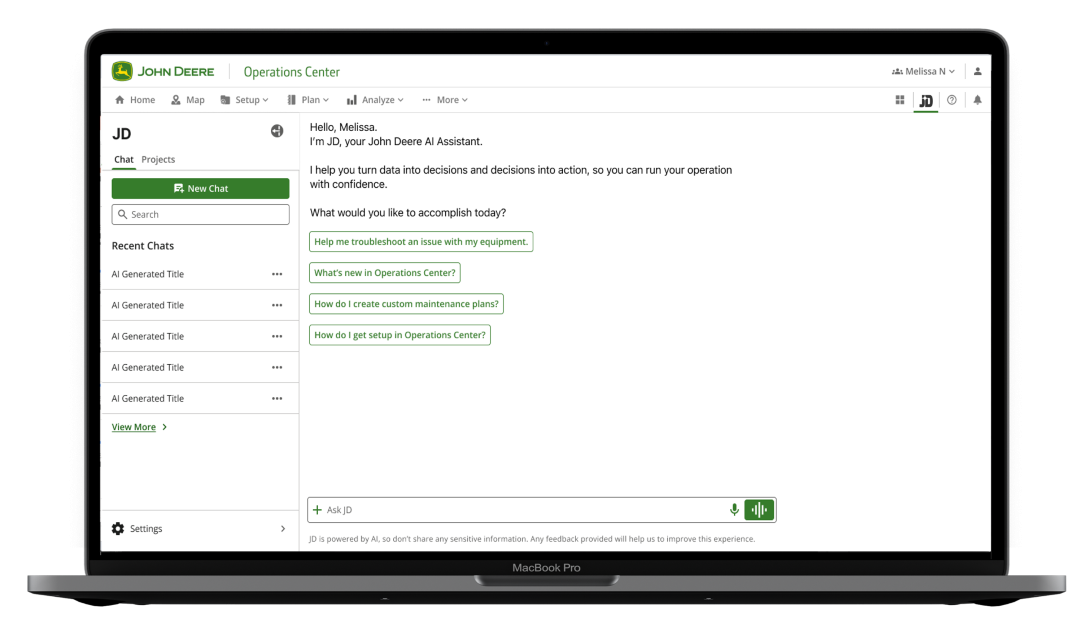
Data is designed to simplify the work, but it can feel overwhelming when it's sitting around in large pools. Connected machines can create another challenge: how do farmers make sense of all the data?
JD, an AI assistant built into the John Deere Operations Center platform, is designed to help producers use that data and identify trends, compare performance, and support operational decisions.
“Farmers have more data available to them than ever before, but the value comes from their ability to use it in the moments that matter,” explained Jahmy Hindman, chief technology officer at John Deere. “JD changes the experience from navigating through a sea of data to simply asking it a question. It puts advanced data analysis within reach by enabling farmers to receive answers tailored to their farm and their needs in a matter of seconds.”
According to John Deere, the system provides information on machine productivity, field performance, and other operational data to help identify patterns and then make decisions.
Data Becomes Action
After all, decisions are at the heart of every operation, and having information to back them up is one of the most valuable things a producer can have at their fingertips. As the National Science Foundation’s definition of precision agriculture suggests, the goal isn’t simply to add more technology, but to make better use of what is already being collected.
As systems become more connected, they can see, measure, map, and analyze conditions in ways that make the information more useful in the field.